METUS Issues Top 3 Trends Reshaping Commercial HVAC in 2026
The commercial HVAC industry has entered a transformative era. As sustainability goals and regulatory requirements shape the market, building owners and contractors have the opportunity to lead the charge toward more efficient, future-forward solutions. Mitsubishi Electric Trane HVAC US has highlighted three critical trends driving innovation for the commercial HVAC space this year:
- Ongoing shift to low global warming potential refrigerants for a more sustainable future
- Personalized comfort as standard expectation
- Increasing competition for conventional boilers from electric hydronic systems
Here’s what these trends mean for commercial contractors and building owners:
Navigating the refrigerant transition
Effective Jan. 1, manufacturers can no longer produce or import commercial variable refrigerant flow equipment using R-410A refrigerant. Instead, the industry has moved to using low-GWP alternatives like R-32, which offers a GWP of 675 compared to R-410A’s 2088 – significantly reducing environmental impact while maintaining high efficiency.
Well-prepared solution providers have planned for a smooth refrigerant transition, ensuring R-32 equipment availability while supporting existing warranties and parts for R-410A systems for at least another decade. R-410A systems will continue to be available for the first half of 2026 from METUS. Regardless of the brand they choose, contractors should plan ahead by preordering equipment during their project submittal phase to ensure adequate inventory.
Contractors and building owners also should investigate how different manufacturers have used the opportunity to enhance serviceability, reliability and overall comfort of the new low-GWP solutions. Newer, well-designed VRF technology should be earning enhanced cooling integrated energy efficiency ratio ratings and stronger heating coefficient of performance scores. Choosing these types of systems may lead to potential energy savings and contribute to reduction in operational costs for building owners.
Contractors should also prioritize training from solutions providers for their teams to meet evolving safety protocols and code compliance requirements. Engineers, architects and distributors are also encouraged to attend training to learn how the shift changes VRF system designs. For instance, the industry will likely start seeing installations with a higher number of smaller VRF systems, rather than a lower number of larger systems.
Last, it is crucial contractors communicate proactively with building owners, accurately positioning the refrigerant transition as a positive step toward improved system performance and greater overall reliability and sustainability. The refrigerant transition isn’t just about compliance. Rather, it’s an opportunity for commercial buildings to modernize and future-proof HVAC systems.
Personalized comfort is the new standard
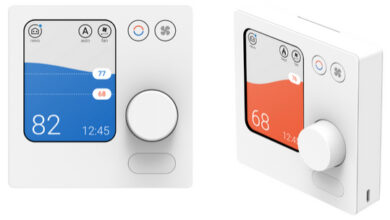
Today’s occupants expect quiet, comfortable environments, making the noisy, inflexible operation of conventional HVAC systems unacceptable. Personalized, customizable climate control has become a standard requirement in commercial spaces.
Facility managers and contractors are expected to increasingly turn toward modern commercial technologies such as VRF and hybrid VRF systems, which can deliver zoned control and allow occupants to adjust temperatures and schedules for their unique spaces.
Electric hydronic heating gains momentum
Boilers have historically powered hydronic heating and domestic hot water systems. Today, the industry is increasingly moving away from fossil-fuel burning building systems and toward smarter, more future-proof solutions. All-electric, air-source heat pumps are starting to compete with boilers for three-phase applications.
All-electric systems can reduce the need for the inspections, safety measures and maintenance related to fossil fuel combustion systems. Certain designs are also modular, making installation more flexible and maintenance easier than conventional water heating systems.
Building location is also playing a role in the switch. In rural areas, more all-electric projects are being planned because accessing the grid is more efficient than adding additional resources like gas and oil. Additionally, as more legislative changes push for reduced use of fossil fuels, electric solutions are the obvious alternative.
Multi-family residences, hospitals, factories, dormitories, hotels, health centers and more will be exploring all-electric three-phase options in 2026 for retrofit projects and for new installations. Contractors should contact distributors and solution providers to learn more about the new technology coming onto the scene.
Lead the HVAC charge in 2026
As the commercial HVAC industry evolves in 2026, the path ahead is unmistakable: a shift toward low-GWP refrigerants, an increasing demand for personalized comfort solutions and the accelerating adoption of all-electric hydronic systems. These changes present significant opportunities for contractors and building owners to create sustainable, high-performance environments.
“Continuous innovation will define the next chapter of growth for HVAC professionals,” said David Archer, vice president of commercial business at METUS. “Those who embrace these changes will set the standard for sustainable, future-forward buildings.”