Overcoming Common Challenges in Plumbing Retrofits
By Sean Comerford
Plumbing retrofits are a practical option for updating aging systems in commercial and industrial buildings. Many facilities operate with infrastructure that requires modification to maintain performance and meet current standards. A significant portion of plumbing and HVAC work involves retrofitting existing systems, making such projects common in building maintenance and upgrades.
When a new tenant occupies a space, the layout often needs reworking, which usually involves modifying the existing plumbing system, rather than complete replacement. In some cases, systems that have reached the end of their service lives must be updated in phases.
The full scope of work may not be clear until walls or floors are opened, as existing conditions often differ from the original drawings. This necessitates careful planning and flexibility. Retrofit work allows contractors to adapt systems within the building’s constraints while avoiding the costs and disruptions associated with full replacements.
Efficiently manage pipe connections, material transitions
The most challenging part of a retrofit project is often the first connection to the existing plumbing system. Older buildings may contain a mix of materials, including cast iron, copper, galvanized steel and clay piping. Many of these may have degraded over time.
Older systems can present several challenges at the connection point:
● Corrosion that weakens pipe walls
● Cracking that worsens during cutting
● Scale buildup that restricts flow
● Unknown material conditions behind walls or below slabs.
The first cut into the system often determines how the rest of the project unfolds. If the pipe is compromised, contractors may need to cut back further or open additional areas to find a usable section.
Common retrofit transitions include:
● PVC to ABS connections using transition cement
● Repairs or tie-ins using fast-setting cements
● Connecting new piping to existing cast iron, copper or galvanized systems.
Creating a secure, long-lasting connection depends on selecting compatible materials and using the correct fittings or cements. Working conditions can add complexity, especially in occupied buildings where systems may still be in use during installation. Reliable, fast-setting solutions help keep work moving and reduce disruption.
Opening older systems can also trigger code requirements. Once exposed, installations may need to be brought up to current standards, which can expand the scope of work.
Addressing misaligned piping, off-center drains
Misaligned piping and off-center drains are common in retrofit projects due to age, movement and previous renovations. Over time, pipe supports can fail, buildings shift and hidden damage can weaken structural connections.
Misaligned piping is typically caused by:
● Failed or missing pipe supports
● Building movement over time
● Water damage that weakens anchoring points
● Improper installation during the original build.
These conditions can lead to sagging pipes, improper pitch or hidden breaks. Lines with too little slope may hold water, while lines with too much slope may leave solids behind. Stabilizing the system is the first step before making corrections. Common approaches include:
● Adding or replacing pipe supports
● Installing friction clamps to stabilize vertical piping
● Securing piping before cutting
● Reworking sections with fittings to restore alignment.
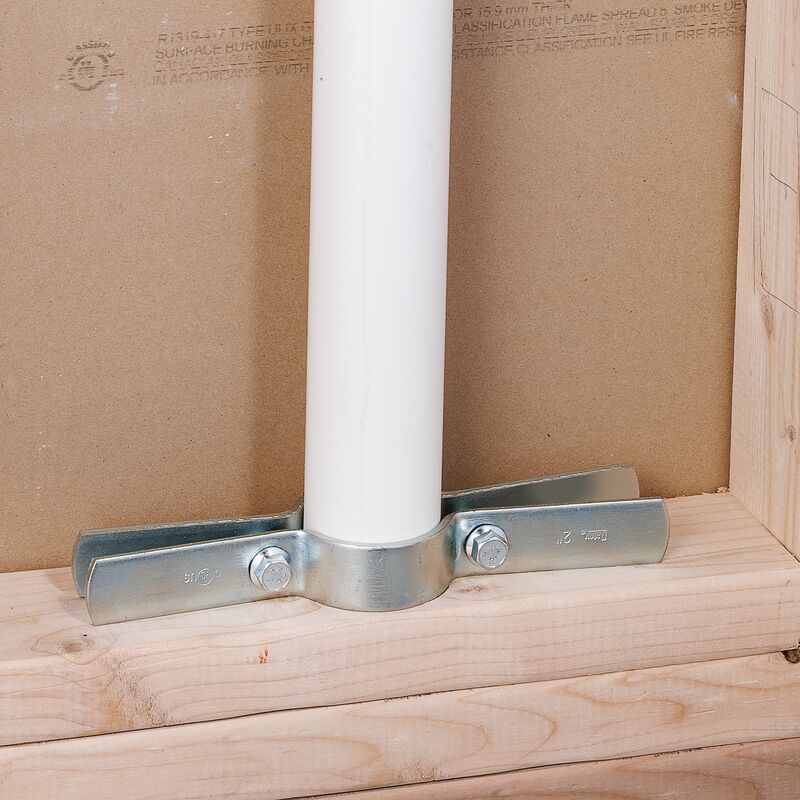 Stabilization is especially important in multi-story buildings. Without proper support, cutting into vertical piping can cause movement that affects multiple floors.
Off-center drains often result from obstructions beneath the floor, such as structural framing, HVAC ductwork or existing plumbing from earlier renovations. In older buildings that have been modified multiple times, layouts can be difficult to predict. In many cases, drain locations cannot be changed due to these constraints, so adapting the installation becomes the most practical solution.
Offset solutions and adjustable systems allow contractors to work within existing layouts while maintaining proper fixture placement.
Managing structural constraints during retrofit installations
Structural elements such as post-tension cables, rebar and limited slab depth can limit how plumbing systems can be modified. Post-tension cables, in particular, require careful planning, as they are under load and cannot be drilled through without risking structural damage. Rebar can be drilled when necessary, though it adds time and wear on tools. Limited slab depth can also create challenges, especially when there is insufficient space to maintain proper pipe slope along a run.
In many retrofit scenarios, working around these constraints requires adapting the installation rather than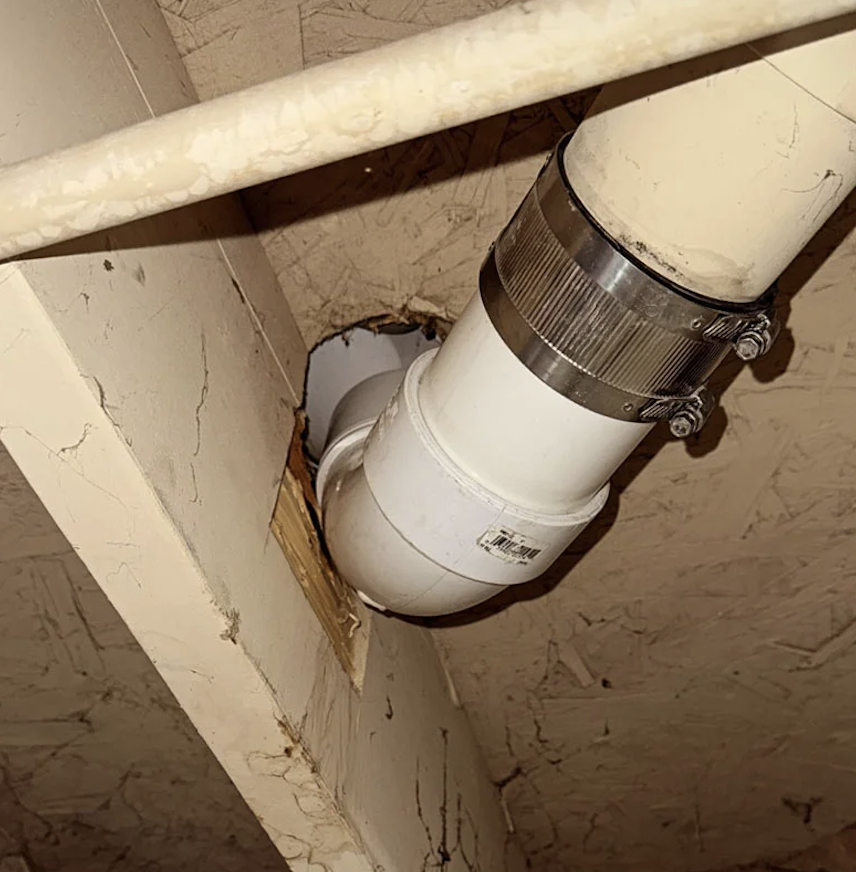 modifying the structure. Flexible, adjustable plumbing solutions can help contractors route piping and drainage in tight or obstructed spaces.
For bath installations, flexible bath waste and overflow systems provide an alternative to rigid piping. These systems allow installers to navigate around floor joists, offset drains and other obstructions commonly found in older buildings, especially where space behind walls or beneath floors is limited.
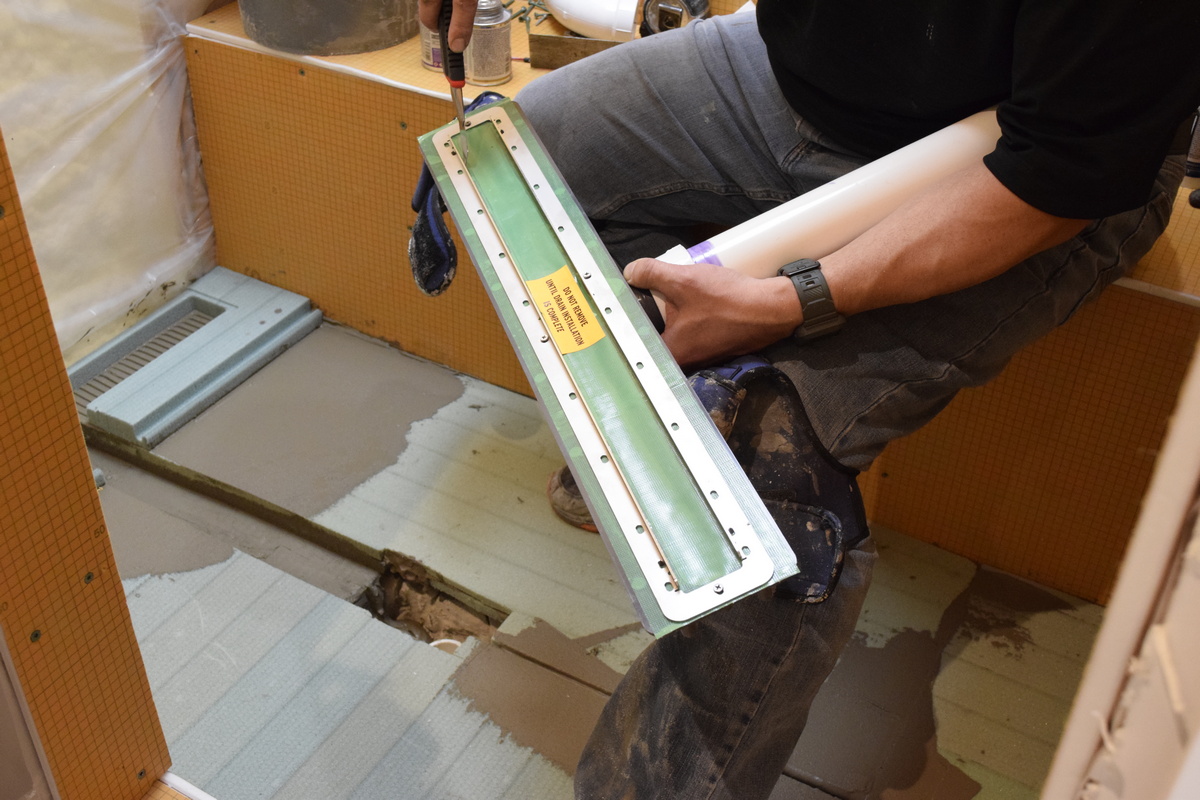
In shower applications, site-sizeable linear drain systems can help accommodate existing drain locations without requiring extensive demolition. These systems allow contractors to adapt to off-center or difficult drain placements, which are common in retrofit projects involving slab construction or multi-story buildings.
Planning and coordination remain critical when working around structural elements. Reviewing drawings, identifying constraints in advance and coordinating with other trades help avoid conflicts and reduce the risk of rework.
Best practices include:
● Reviewing drawings before cutting or drilling
● Coordinating with general contractors and other trades
● Identifying structural elements in advance
● Planning pipe routes carefully
● Using pre-installation solutions to preserve access points.
Retrofit projects are inherently unpredictable. Conditions behind walls and under floors are often unknown until the system is exposed, which makes adaptability essential. Using flexible products and installation methods allows contractors to respond to unexpected conditions, keep projects moving and reduce the need for rework. It also makes it easier to accommodate future changes as building needs continue to evolve.
Sean Comerford is a technical applications manager at Oatey Co.