
How Workforce Development, Training are Shaping the Future of HVAC & Plumbing
By John Zink
Despite high consumer demand for trade services, fueled by residential maintenance, significant data center growth and investments in commercial infrastructure, the building construction industry is grappling with a lack of qualified workers.
This labor shortage is particularly tangible in the HVAC and plumbing sectors, where rapid technological advancements and evolving environmental mandates are widening the skills gap among the current workforce. The role of the modern technician has shifted beyond basic mechanical tasks. They are now expected to be consultants who must engage in lifelong learning. In order to protect the industry long-term and satiate market supply and demand, the trades must continue prioritizing workforce development and training at various career stages and for all p-h-c professionals.
The skilled trades gap and the labor shortage
For years, young people graduating high school were turned away from vocational paths and toward traditional, four-year college degrees, which steadily widened the skilled trades gap. Data from the U.S. Bureau of Labor Statistics highlights that demand for HVAC technicians is increasing quickly, at roughly 8% a year. This expansion generates tens of thousands of new job openings annually. Unfortunately, a massive wave of retirements among technicians means that experienced professionals are leaving the field faster than new recruits are entering the pipeline. This labor deficit impacts everything from residential repair wait times to the execution of massive non-residential engineering projects.
Rapidly evolving technologies and strict regulations
The workforce crisis is exacerbated by the speed of technological change and regulatory evolution within the trades. For instance, environmental protection regulations are phasing out older refrigerants in favor of low-GWP alternatives, such as A2L refrigerants. Navigating the safety, handling and storage of these flammable substances requires specialized knowledge, training and new certification.
Additionally, as consumers expect smart homes (including thermostats, automated zoning, remote diagnostics and HVAC systems that link to home Wi-Fi networks), field technicians are required to understand basic data security and digital networking. They must be comfortable working alongside software that optimizes system performance in the field, troubleshoot on the spot, as well as institute operational workflows in the office.
Without structured, ongoing education and training, p-h-c professionals risk falling behind, leading to high callback rates, compromised safety compliance and lost revenue.
Continuing education as the only solution
To mitigate these challenges, continuing education and training is a business necessity. Upskilling current teams directly addresses the labor shortage by drastically boosting employee morale, confidence and retention. When an HVAC business invests in its workers’ growth, technicians feel valued, reducing turnover and increasing job satisfaction.
The Plumbing-Heating-Cooling Contractors’ Educational Foundation has been pioneering modern training for plumbers and HVAC technicians that is required to meet the fast-paced nature of the field. The Foundation has an array of courses from pre-apprentice programs to targeted workforce development materials that offer pathways into the trades, dismantling old stigmas surrounding vocational work. Through the PHCC Academy, the Foundation offers online learning modules, accessible on any device and at any time, allowing (pre-)apprentices to learn on their own accord.
The Foundation provides specialized technical training for apprentices and technicians, paired with sales and communication skills, as well as business leadership courses, which are needed for building long-term success in the trades. While confidence and experience in the field are crucial, so are quality customer service skills, clear communication, professional ethics and good leadership to ensure technicians deliver customer value alongside mechanical expertise.
 Breaking the glass ceiling
Apart from offering resources for both technicians and office professionals, most online courses offered through the academy don’t require any pre-requisite knowledge and can be taken on one’s own time. The Foundation also manages tuition assistance to help decrease financial barriers by providing annual scholarships, and sponsors competitions such as SkillsUSA, as well as their own national plumbing and HVAC competitions held during the annual CONNECT conference that motivate and engage the next generation of workers.
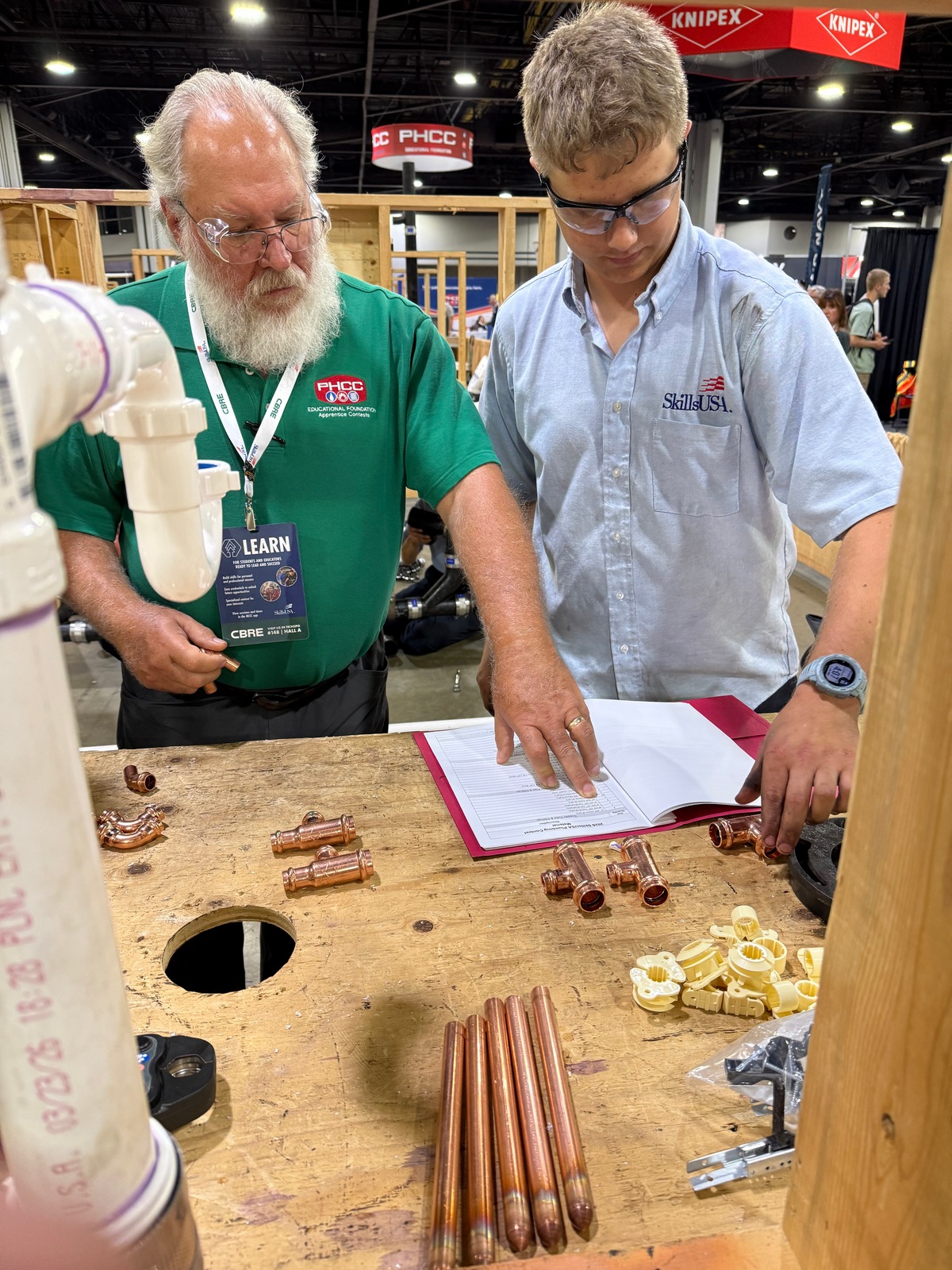
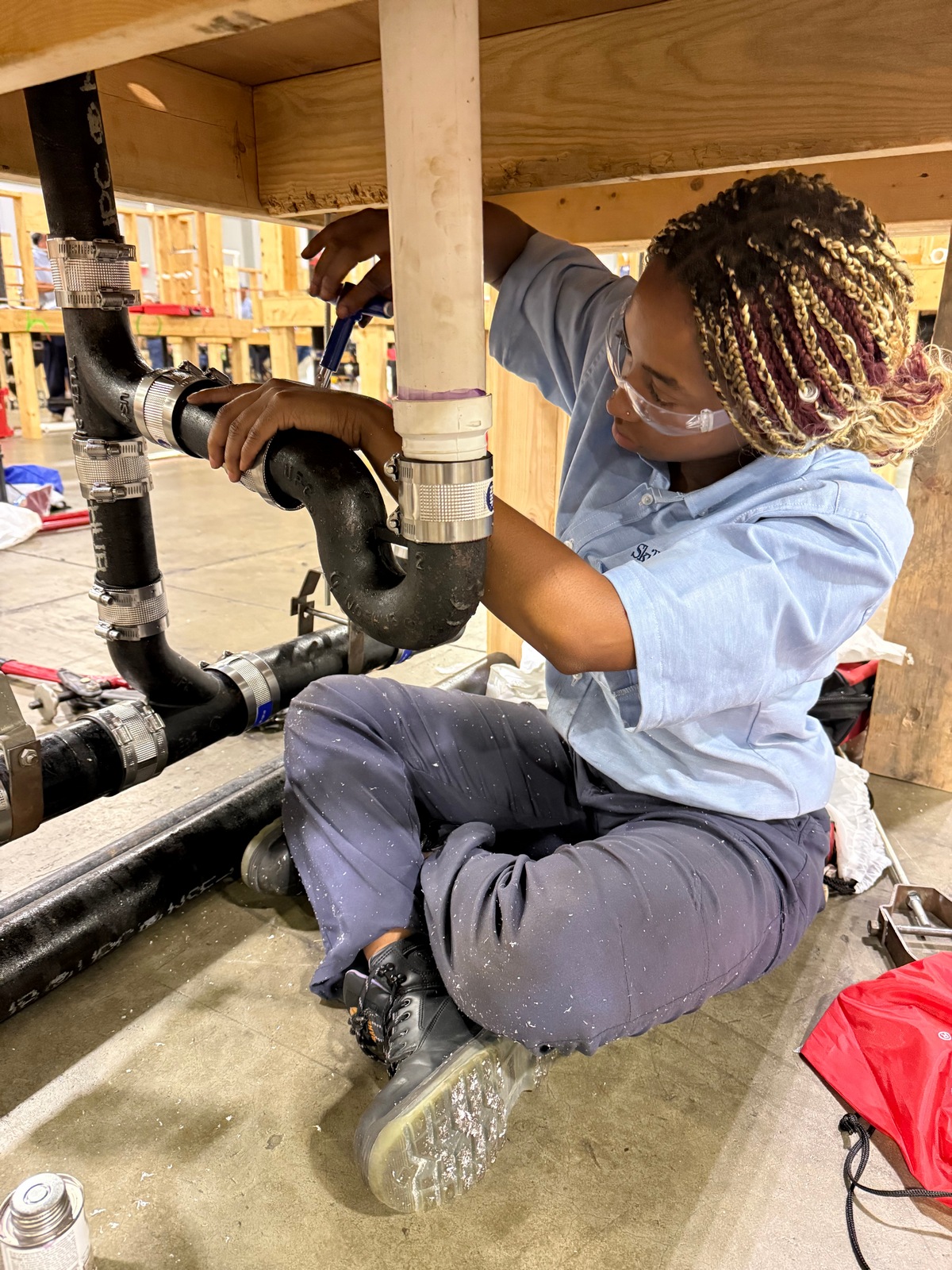
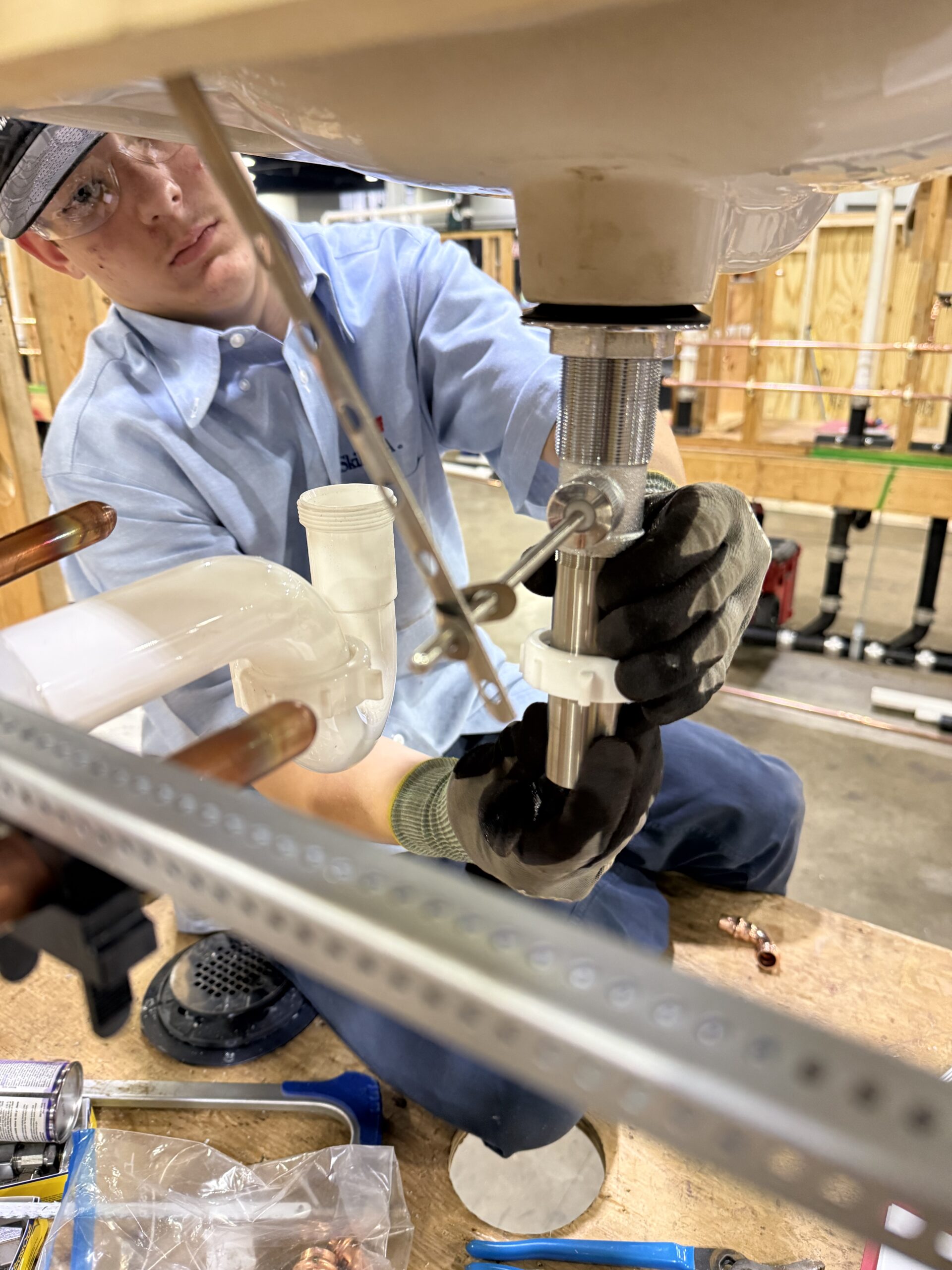
As one of the world’s largest hands-on workforce development competitions, SkillsUSA brings together the nation’s most skilled technical students enrolled in high school, vocational, technical and post-secondary schools. Earlier this year in June, 48 plumbing competitors proved their real-world readiness by using copper, PVC and cast-iron materials to rough-in a mock bathroom over a two-day event in Atlanta, Georgia.
While the HVAC and plumbing industries are facing undeniable challenges, they are not insurmountable. To be successful, the industry needs to move away from considering education as an administrative expense, and instead think of it as a business investment. Through comprehensive courses, engaging competitions and on-the-job training, the next generation of professionals will be fully equipped to properly power, heat, cool and connect our world safely and sustainably.
John Zink is vice president at the PHCC Educational Foundation.