
Building Decarbonization: Aligning Priorities for Long-Term Performance
By Chrissie Walsh
Commercial building decarbonization requires aligning the people, decisions and business priorities that shape design, construction and operation, and currently, an interesting transition is taking shape. Technological advancements are continually evolving toward ultra-high efficiency, creating new design opportunities to reduce energy consumption. At the same time, changing financial incentives and building performance requirements are heavily influencing the adoption of these solutions across the construction industry.
Understanding the changing decarbonization landscape can help contractors prepare for evolving project expectations while continuing to deliver reliable mechanical and plumbing systems.
Understanding stakeholder value
One of the challenges facing building decarbonization is that the professionals involved in a project often approach sustainability from different perspectives and starting points.
Building owners typically consider long-term operating expenses and future asset value, while developers may place greater emphasis on upfront investment and project schedules. Developers, however, often operate on shorter time horizons. Their primary concern is project feasibility, financing, schedule and return on investment.
Engineers and specifiers are responsible for designing systems that meet performance objectives while remaining practical to construct. They are often the strongest advocates for decarbonization because they understand both the technical opportunities and long-term performance implications.
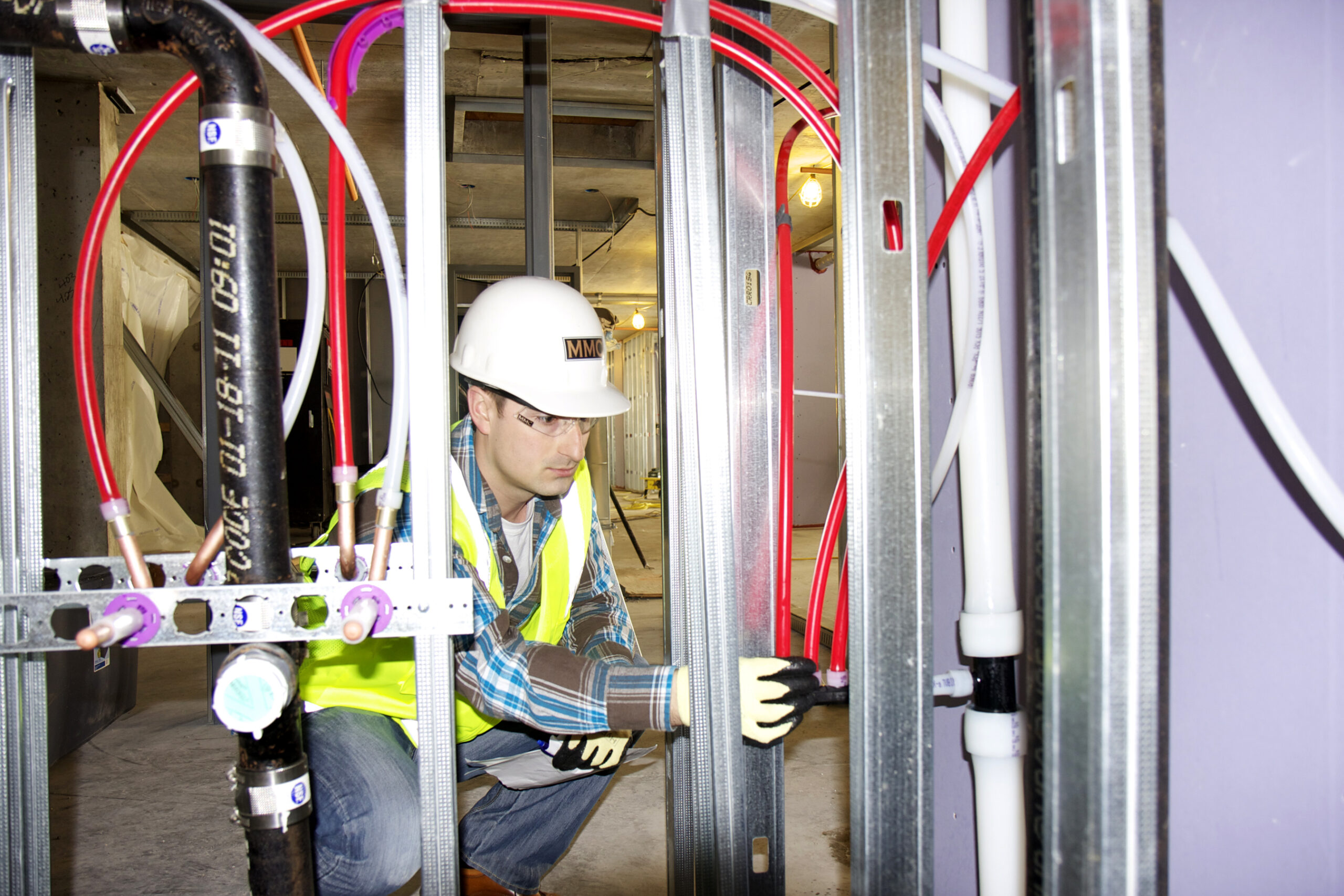 HVAC and plumbing contractors view projects through the realities of installation, labor, subcontractor coordination, schedule and risk. They are responsible for turning ambitious decarbonization goals into functioning systems. Involving contractors earlier gives engineers a better understanding of any existing conditions before equipment is specified and installation begins.
These differences can affect whether high-efficiency solutions are implemented in a project, especially when the decision-maker making the initial investment may not benefit from the long-term operational savings.
Understanding the priorities behind system decisions can help contractors participate more effectively in conversations about project feasibility and performance expectations. The challenge is not that any stakeholder opposes decarbonization; it’s that shared objectives need to be established collaboratively rather than sequentially.
Preparing existing buildings for new system requirements
Decarbonizing existing buildings is rarely a matter of simply swapping old equipment for new technology.
Mechanical and plumbing contractors play a uniquely important role in decarbonization retrofits, as they work at the intersection of design intent and existing building realities. Unlike new construction, retrofit projects rarely unfold exactly as planned.
Contractors must consider aging infrastructure, undocumented field conditions, space constraints, utility limitations and operational requirements that may change original installation intentions. They are often tasked with integrating modern technologies into systems or mechanical rooms not originally designed to accommodate them.
This requires more than installation expertise. Contractors frequently serve as trusted advisors throughout the retrofit process, helping owners and engineers evaluate trade-offs, identify constructability challenges, adapt designs to field conditions and maintain project goals when unforeseen issues arise. Their firsthand understanding of installation realities, system interactions, commissioning requirements and operational impacts allows them to bridge the gap between decarbonization aspirations and practical implementation.
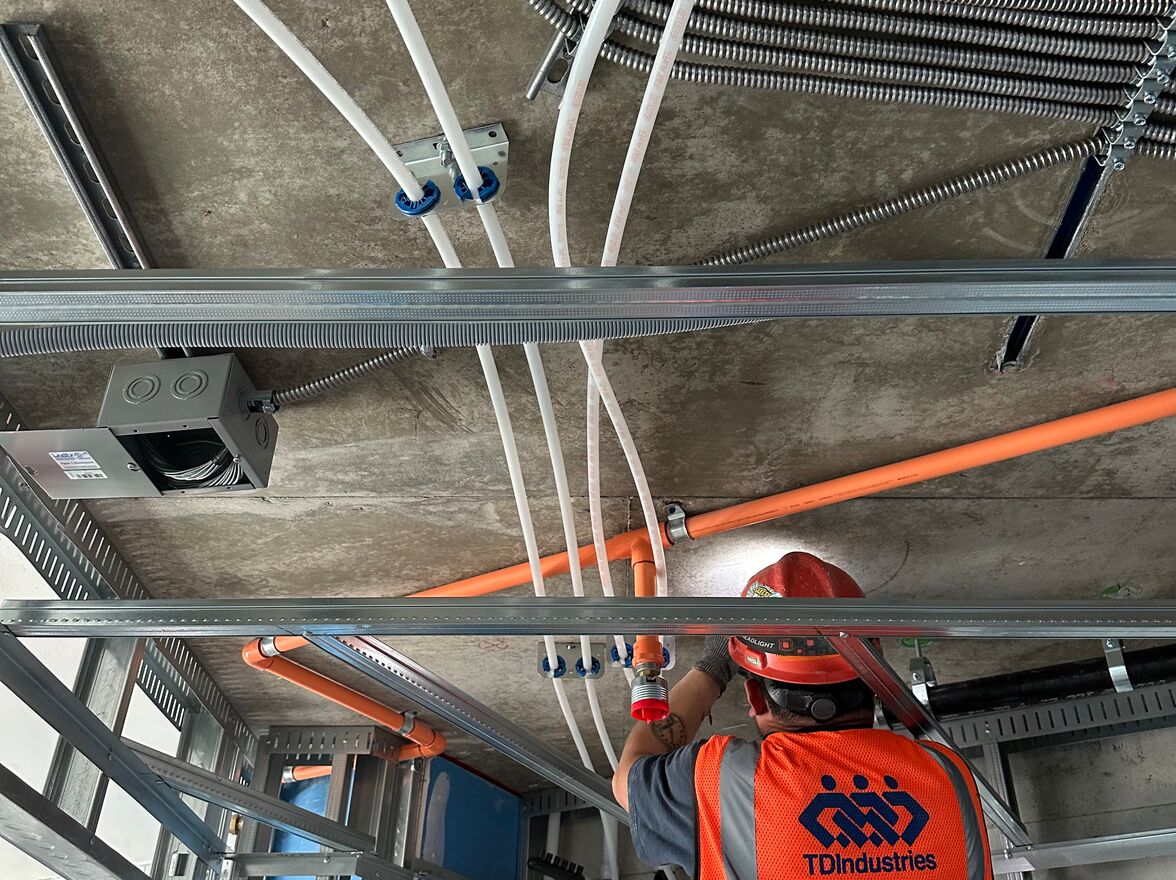 Contractors who participate in design discussions can flag concerns before work begins. An installer reviewing plans for a mechanical room may recognize the proposed equipment will be difficult to access or that existing connections will need to be modified. Addressing those conditions during design allows engineers to reconsider the layout before installation crews arrive. In this way, contractors serve as an essential bridge between ambitious sustainability goals and real-world building performance.
Distributors and counter staff can also help contractors evaluate equipment and component availability before installation begins. When a retrofit requires connections to existing systems, discussing these requirements with suppliers early can help contractors identify the necessary materials and avoid delays once work is underway.
Keeping system performance in focus
Contractors also play a critical role in ensuring decarbonization goals survive the transition from project delivery to day-to-day building operation.
A system may meet its performance targets on paper, but those expectations depend on how the equipment is installed and operates within the building. For HVAC and plumbing contractors, decisions involving system connections, installation sequencing and controls can influence whether the completed system performs as designed.
During commissioning, contractors need to understand the equipment’s controls and operating sequences, particularly when working with systems they haven’t installed before. Without that familiarity, problems with system operation can carry over into the building’s everyday use.
Contractors are also uniquely positioned to help train building operators and maintenance personnel on proper operation, troubleshooting and preventive maintenance practices. This knowledge transfer reduces the risk of performance drift, occupant comfort issues and energy waste after occupancy.
As buildings incorporate newer technologies, this exchange of knowledge becomes increasingly valuable in helping facility teams understand system operation and preserve intended performance.
Navigating changing policies, incentives
Federal incentives that previously helped make building decarbonization projects financially attractive are being modified or phased out. Meanwhile, some states and municipalities are moving ahead with their own building performance standards. For HVAC and plumbing contractors, working across different jurisdictions now means keeping up with changing requirements that can affect equipment selection and project planning.
With federal incentives changing, building owners have to consider whether the savings on future energy bills justify spending more on equipment today. Rising energy costs are keeping that discussion relevant, particularly when owners must decide whether to replace aging equipment with a similar system or to invest in a more efficient alternative.
Contractors are often part of these conversations when aging equipment needs to be replaced. Their experience with existing building systems allows them to explain what an upgrade would involve, including modifications that could increase the initial cost. This gives owners a better understanding of the work required before deciding whether to replace equipment in kind or pursue a more efficient alternative.
What comes next for decarbonization?
While the drivers of decarbonization continue to evolve, projects are still shaped by familiar realities: budgets, schedules, risk management and established construction practices. In this environment, contractors play an important role in helping owners and project teams evaluate emerging technologies, navigate changing codes and policies and identify solutions that deliver measurable value.
Decarbonizing will not depend only on aligning incentives with the availability of emerging technologies. It requires aligning the people, decisions and business priorities that shape how buildings are designed, constructed and operated. The next phase will depend on solutions that deliver measurable value, and contractors are well-positioned to help shape that into reality.
Chrissie Walsh is regional head of sustainability at GF Building Flow Solutions Americas. She can be reached at [email protected].