
Next-Gen HVAC: Empowering Professionals with AI-Driven Products
By Glenn Wilder III
The integration of artificial intelligence is influencing the commercial HVAC landscape.
What was once a solution primarily focused on maintaining temperature is evolving into an intelligent platform designed to learn, adapt and help address operational requirements. For HVAC professionals, this era of intelligent climate control represents a shift, encouraging a new understanding of these added benefits and offering opportunities to deliver supported performance, comfort and potential energy savings to building owners.
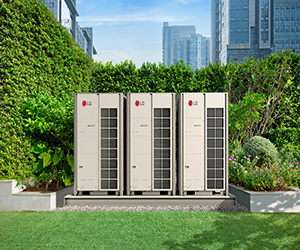
The evolution of commercial HVAC is highlighted by advanced heat recovery heat pump variable refrigerant flow solutions, which utilize on-device AI to support efficiency and control in heating and cooling. These advanced units offer dynamic functionality, capable of analyzing environmental conditions and responding to usage patterns, rather than operating solely as static equipment.
With the capability to monitor elements such as temperature fluctuations, humidity and occupational status (where compatible sensors are installed), these products are designed to adjust operation based on environmental data. This level of control supports more intelligent facility management strategies.
 Smarter operations for potential savings
A primary benefit of these HVAC advancements lies in their potential to help improve energy efficiency. By leveraging AI, newer products are designed to analyze a building’s usage trends over time, allowing for performance adjustments. This can enable end-users, like building owners and facility managers, to move beyond simple thermostat settings to a more adaptive approach.
For instance, these intelligent products can track utilization data, offering insights into energy usage trends. Additionally, they can be configured to provide alerts regarding predefined energy thresholds. This capability allows building managers and owners to make informed decisions and helps manage operational costs. For HVAC professionals, understanding and implementing these AI-driven monitoring and alert systems is becoming increasingly important, allowing them to offer opportunities for enhanced comfort and potential operational efficiency to clients.
Precision comfort, reliable performance
Beyond efficiency, the latest HVAC solutions are designed to support advanced levels of occupant comfort. AI-powered products facilitate targeted zoning, allowing for independent temperature controls across diverse commercial spaces — from hospitals and schools to high-rise offices and airports.
This means a conference room can be maintained at a target temperature for a meeting, while an adjacent office maintains different conditions, all while supporting overall system efficiency. Beyond temperature, these solutions also contribute to quieter environments, an important element in many buildings where a reduction in ambient noise is prioritized. In fact, AI-driven load and noise control are designed to help achieve sound pressure levels between 50-70 dB(A), depending on the specific unit and operating mode.
These sophisticated units are also engineered for performance across a wide spectrum of climates. New VRF innovation supports heating capabilities extending down to 5F and is rated to operate across temperatures from -22F to 126F, depending on system configuration. This broad operating range supports climate control year-round, helping minimize discomfort and support productivity while addressing challenges often associated with traditional systems in extreme weather.
For professionals installing and maintaining these solutions, the compact footprints of selected advanced units are designed to streamline installation in space-constrained mechanical rooms. Meanwhile, maintenance-friendly features like auto-tuning and remote firmware updates help support maintenance efficiency, contributing to project performance over time. The design, often featuring protective coatings on coils and treated panels, supports durability even in harsh environments, making them a valuable addition to commercial facilities.
The integration of AI into commercial HVAC solutions represents a shift in operation, moving beyond incremental improvements.
Glenn (Trey) Wilder III is a senior product support engineer for LG Air Conditioning Technologies.