
Trends Reshaping Hydronic Heating and Cooling Systems
By Daniel Giosia
Hydronic heating and cooling systems, which can be supplied by both high-efficiency gas and by heat pumps, have long been a staple of efficient climate control, both in commercial and residential applications. But in recent years, new technologies, refrigerant innovations and smart controls have brought hydronics into a new era — one far better suited to meet the growing demand for energy efficiency and sustainability. For HVAC contractors, understanding these emerging trends is essential to staying competitive in a market rapidly moving toward decarbonization and intelligent building management.
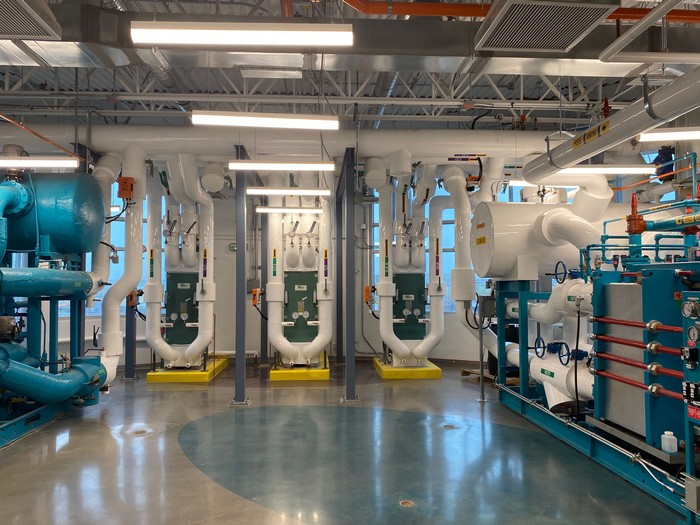
One trend is the rising popularity of air-to-water heat pumps. These units extract heat from the outside air and transfer it to water that circulates through radiators, radiant floors, fan coils or other delivery systems. For homeowners and building operators, this means lower operating costs and a smaller carbon footprint, an attractive combination as energy standards continue to tighten.
At the same time, high-efficiency gas boilers continue to play a major role in today’s hydronic designs, especially in colder climates where heat pump performance may be more limited. These systems can serve as hybrid backup or supplemental heat sources. When paired with heat pumps in dual-fuel or bivalent systems, they provide reliable comfort while still meeting energy reduction goals.
Another key trend is refrigerant transition. In hydronic applications, chemical refrigerants are increasingly being replaced with natural refrigerants like CO₂ (R-744), which has an ultra-low GWP and no ozone depletion potential. This new refrigerant not only complies with evolving regulations but also improves long-term system sustainability.
The shift toward greener refrigerants and high-efficiency systems is being propelled by both government mandates and growing consumer demand for sustainable building solutions. As building codes evolve to favor electrification and decarbonization, hydronic systems are poised to play a leading role, whether supplied by high-efficiency gas or by heat pump technology.
Smarter controls streamline installation and maintenance
Just as refrigerants and compressors have evolved, so have the control systems that operate hydronic systems. Modern controls are more intelligent, more connected and more user-friendly than in generations past.
Consider the rise of app-based configuration and control. Gone are the days of complex manual setup. Many manufacturers now offer app-based systems that allow contractors to configure, monitor and optimize installations directly from a smartphone or tablet. This reduces installation time and minimizes the risk of configuration errors, which can have a huge impact on customer satisfaction.
Hydronic systems can also integrate seamlessly with commercial building management systems, giving facility teams real-time insight into performance. Through intuitive dashboards, they can adjust zoning, monitor energy consumption and diagnose problems before they escalate. This integration supports proactive maintenance, extending equipment life and reducing downtime.
Even artificial intelligence is finding its place in hydronics. Some systems now employ AI-driven analytics that learn from usage patterns and weather forecasts, automatically optimizing system performance. Predictive maintenance algorithms can detect early signs of issues, allowing for preventative action before breakdowns occur.
Meeting demand for greener solutions
For contractors, hydronic technology offers a clear path to meeting growing market demand for efficiency and sustainability in both residential and commercial applications.
Consider how zoning controls allow precise temperature management in different spaces, reducing waste. Meanwhile, on-demand heating systems deliver heat only where and when it’s needed, ensuring maximum comfort and minimal waste. These features make hydronics a compelling option for environmentally conscious clients seeking comfort without compromise.
For contractors, hydronics present a growing opportunity to expand service offerings and capture more of the sustainability market. With many states offering rebates or tax incentives for the installation of heat pump water heaters or high-efficiency gas systems, homeowners and property managers are increasingly looking for qualified professionals who understand the value of hydronics.
Installation is generally straightforward, and when paired with other high-efficiency technologies, such as hydronic heating loops or solar thermal preheating, contractors can deliver integrated solutions that significantly reduce a building’s overall energy consumption. The long-term savings and environmental benefits make these systems an easy sell to clients who value both comfort and sustainability.
The next frontier of hydronics
While it’s impossible to predict the future, several trends seem poised to shape hydronic technology. The industry may soon see the arrival of a near-zero GWP “standard” refrigerant that could simplify design and compliance. Meanwhile, AI and data analytics will continue to advance, enabling systems to adapt automatically based on weather, occupancy and usage patterns.
For HVAC contractors, staying informed and proactive in adopting these technologies isn’t just a way to serve clients better; it’s essential for remaining competitive in an industry rapidly moving toward intelligent, sustainable comfort solutions.
Daniel Giosia is product manager for specialty products at Bradford White.
Image by Namrata Kotak